
The Masterclass Guide to Confectionery Design: What Every Copacker & Brand Must Know Before Cutting Tooling
Launching a new candy or nutraceutical brand is an incredible milestone, but transforming an initial art concept into a reliable, high-yield commercial production run requires specialized engineering knowledge. In large-scale contract packaging and high-output kitchens, your cavity design is directly linked to your daily manufacturing efficiency.
If a shape is designed without structural production drafting, your line will face devastating bottlenecks like product tearing, variable dosing, and demolding micro-lag.
To ensure your product launches flawlessly, our Advanced CAD Production Engineering team has compiled the ultimate industrial checklist of what you need to know before investing in commercial confectionery tooling.
1. Shape Architecture vs. Packaging Dynamics: Preventing the "Squish"
Size and outer shape are the most fundamental ways consumers recognize your brand. However, your engineering footprint must account for your downstream packaging line:
-
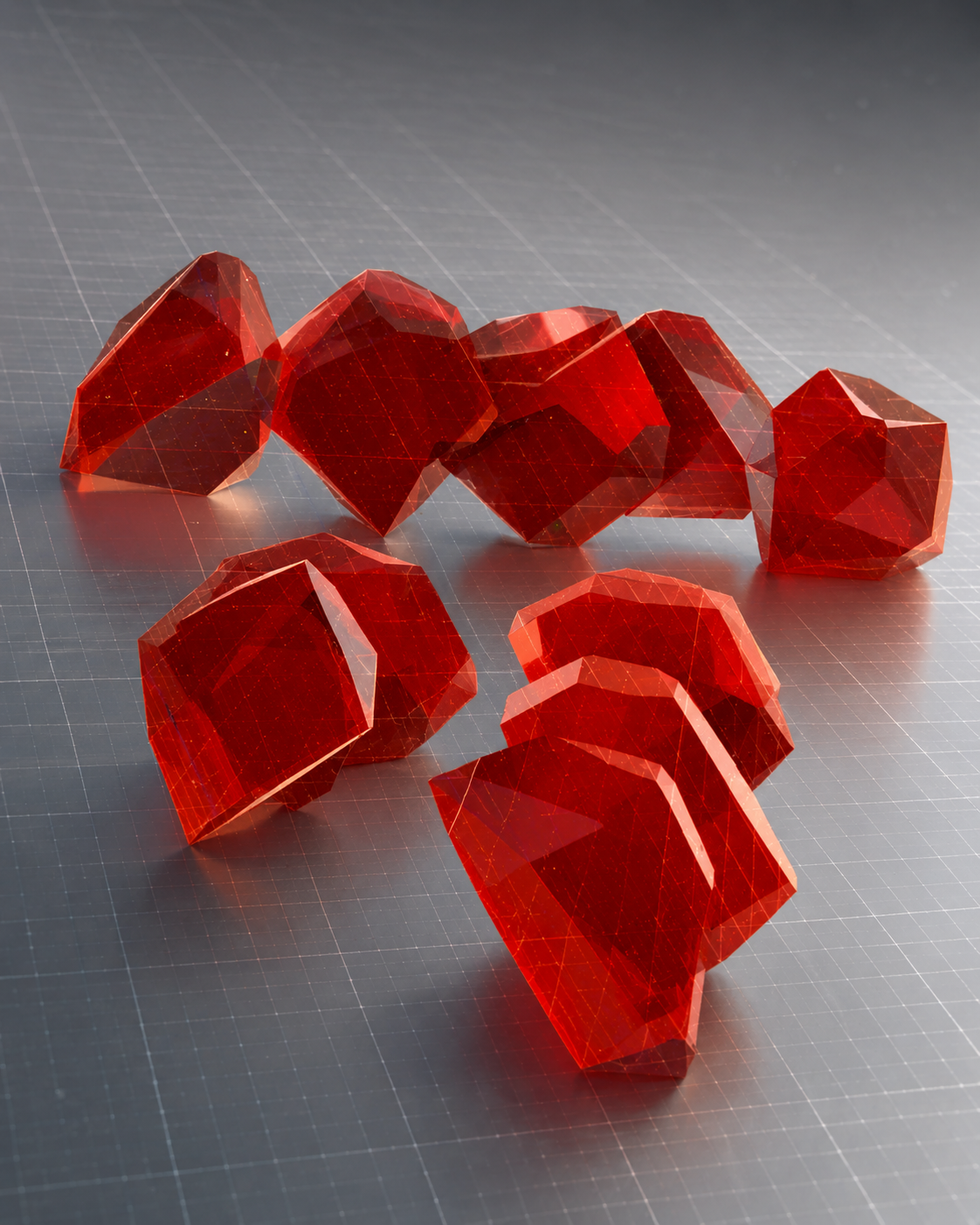
The Compact Packaging Rule: If your final confections are destined for tight, highly compact packaging environments—such as bulk pouches, bags, or high-density count bottles where they face daily friction and pressure—fine interior surface details will inevitably fade. For these workflows, our engineering team recommends focusing heavily on a strong, distinct outer shape silhouette. Even if the candies experience physical compression during shipping, a highly defined outline ensures your branding remains instantly recognizable to the consumer.
-
The Curvature Rule for Zero-Tear Extraction: For smooth, effortless demolding, we highly recommend custom shapes built with smooth, curved geometric lines. Fluid curves allow the mixture to slide out cleanly without mechanical friction points. Sharp, un-drafted right angles create micro-vacuum traps that can snap delicate edges during high-speed mechanical sweeps.
2. Choosing Your Machining Profile: 3D Flat Edge vs. 2D Design
Your tool processing strategy directly affects your candy’s final visual premium. Using advanced CNC Precision-Machined Master Tooling and ultra-high-detail programming, Vector Molds offers two core manufacturing profiles to enhance your visuals:
-
3D with Flat Edge: Developed using advanced multi-axis CNC milling, this option blends intricate depth variations with a crisp, uniform flat perimeter. This profile is exceptional for automated lines, creating a solid base that prevents line flashing while highlighting complex, artistic structural depths on the face of the candy.
-
2D Design / Debossed Machining: Ideal for crisp logos and text requirements. If you are launching a product that will be finished on a sanding line with sugar coatings, we recommend a highly pronounced 3D relief or a deep 2D debossed machine cut. These deep structural valleys act as natural storage wells for sugar crystals. The sugar stores perfectly inside the precision lines, creating high-contrast definition that makes your branding pop visually to the retail consumer.
3. Adapting to Your Specific Production Method
An elite mold layout must always adapt to the specific kitchen or machine workflow running the line. We take the layout complexity completely off your shoulders by matching our geometry to your exact production style:
The Artisan & Medium-Yield Workflow: The "Flood & Scrape" Half Sheet
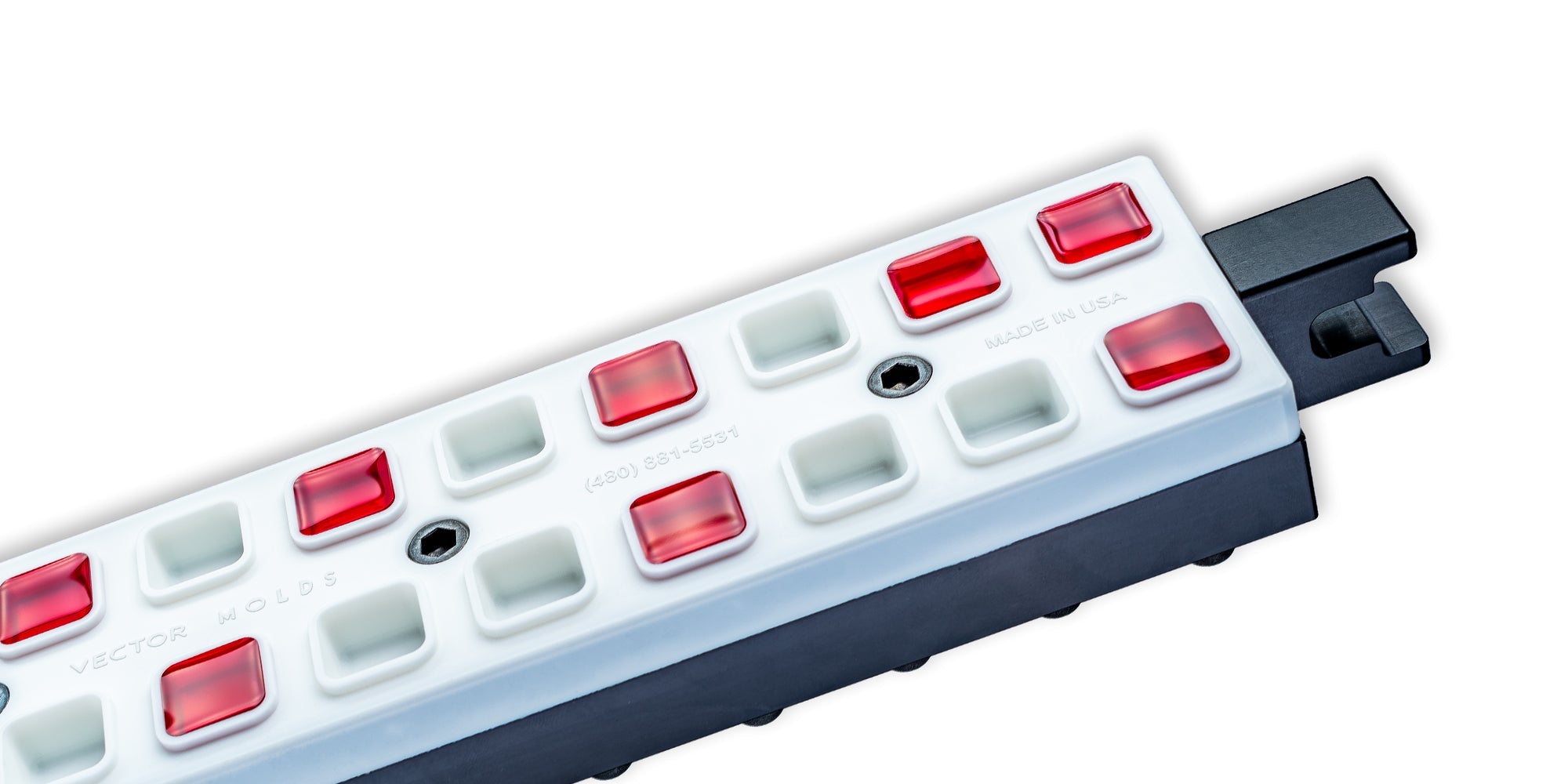
If you are starting out in a small commercial kitchen or scaling up a craft house-made operation, we highly recommend starting with our professional Half-Sheet Molds. These are meticulously engineered to fit exactly half of a standard bakery cooling rack for rapid, consistent thermal management.
Our half-sheet methodology maximizes your usable surface area through an ultra-dense cavity arrangement, allowing you to yield hundreds of confections from a single pour.
Our straight-edge external mold design allows you to lay multiple sheets tightly together on a flat work surface with absolutely zero gaps in between. Operators simply flood the workspace with the hot mixture and smoothly scrape across the flush surface. This ensures perfect cavity dosing with zero product waste. When set, our advanced Vector PolishedFlow™ Finish allows the entire sheet to be effortlessly popped out by hand.
The Large-Scale Industrial Workflow: Automated Depositor Arrays
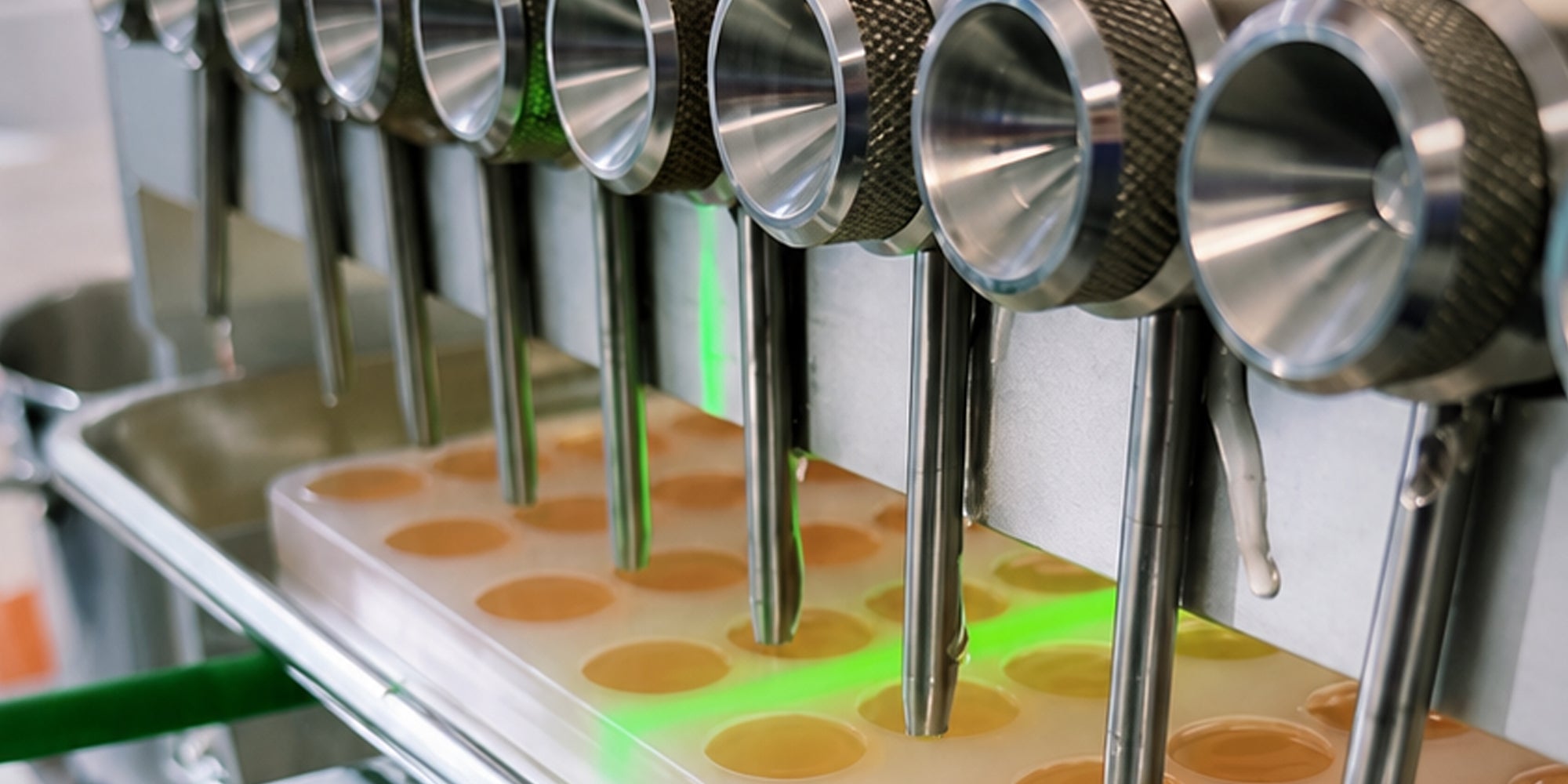
If a mechanical automated depositor is driving your factory line, our team requires your exact machine brand name and nozzle layout parameters. We develop custom, machine-compatible Depositor-Ready Production Layouts mapped to your exact hardware.
Before we move forward with a massive enterprise production order, we manufacture prototype test sheets for you to run on your automated line. If your machinery uses automated mechanical strike plates for high-speed automated extraction, we work directly with your machine manufacturer’s engineering company. We coordinate the PLC and firmware programming requirements directly with their factory, ensuring a flawless, turn-key integration for your team.
4. Specialized Tooling Adaptations: Chocolates, Variants, & Copackers
-
Chocolate Bars: Chocolate requires a vastly different thermal cooling curve and mechanical shrinkage tolerance than gelatin or pectin. We engineer distinct mold layouts specifically optimized for chocolate tempering and high-gloss snap release.
-
Specialty Packaging Adjustments: If your facility utilizes pre-formed plastic retail blisters or rigid custom tins, we can reverse-engineer the mold cavity layout dimensions to perfectly match the internal tolerances of your final retail packaging.
-
Multi-Kitchen & Flavor Variants: If your brand works across a wide network of diverse regional copackers, kitchens, or handles complex multi-flavor brand portfolios, we design custom variants of your core shape. We smoothly alter the volumetric dosing weights, layouts, and technical boundaries while keeping your primary brand identity looking completely unified across different state lines.
The Vector Molds Engineering Guarantee
Every production sheet engineered by our team comes backed by 9 years of market-tested durability and strict commercial manufacturing compliance:
-
Certified Safe: Strictly FDA-Approved, 100% Food-Grade, and entirely BPA-Free.
-
Material Efficiency: Formulated to optimize cavity density, minimizing the footprint and material needed to run your daily batches.
-
Vector PolishedFlow™ Technology: Precision-machined polished cavities that maximize release performance and eliminate stick-points.
-
Hygienic Non-Porous Surface Technology: High-density platinum silicone that prevents ingredient absorption, ensuring low residue retention and rapid clean-in-place (CIP) turnaround times.
-
End-to-End Technical Support: Full engineering consultation from your initial CAD schematic to successful machine validation testing.
Ready to bring your custom confectionery concept to life? Contact our industrial engineering department today to map out your next high-volume manufacturing run.
Frequently Asked Questions
Custom Confectionery Design & Production FAQ
Q1: What is the mechanical difference between 3D Flat Edge and 2D Design when it comes to demolding?
A: 2D designs are cut flat into the master mold at a consistent depth, making them exceptional for crisp text, standard shapes, and clean logos. A 3D Flat Edge design utilizes multi-axis CNC milling to create intricate, multi-layered fluid depth variations on the face of the candy, while dropping down to a perfectly flush, sharp perimeter lip. The 3D flat edge profile allows automated mechanical sweeping arms to glide across the tray seamlessly, completely eliminating edge-chipping on visually complex, premium candy designs.
Q2: Why do you recommend a highly pronounced 3D or debossed design for candies that will be heavily sugar-sanded?
A: Sugar crystals (sucrose) require structural recessed zones to nest in. If your cavity details are too shallow or faint, the sugar coating will completely mask the design, leaving you with an unrecognizable lump. By engineering deep, pronounced 3D relief lines or sharp 2D debossed machining channels, we create dedicated retention valleys. The sugar sanding settles perfectly inside these precision-cut lines, using the crystals themselves to highlight your logo with stark contrast.
Q3: How does focusing on a strong outer silhouette protect compact pouch packaging lines?
A: When candies are dropped into bulk pouches, bags, or high-density count bottles, they experience relentless physical friction, weight pressure, and climate shifts during mass retail distribution. This causes fine, superficial surface details to smooth out or "melt" together over time. A strong, easily recognizable outer shape silhouette ensures that even if the piece gets squished or flattened slightly in transit, the overall brand identity remains 100% intact and instantly identifiable to the consumer upon opening the package.
Q4: Why do smooth, curved geometric lines release faster than sharp, 90-degree angles?
A: Physics dictates that sharp 90-degree corners create localized physical friction and micro-vacuum pockets when a vacuum plate or mechanical ejector pin pulls the set mixture upward. This vacuum pressure leads to "stick-points," which can snap or tear delicate corners. Precision Demolding Geometry utilizes smooth, sweeping curves and subtle internal draft angles to break the surface tension immediately, letting air rush around the piece for a rapid, zero-tear extraction.
Q5: We are starting out small via hand-pouring. Why is the "Flood & Scrape" technique on a half sheet so efficient?
A: It eliminates manual human error while keeping costs low. Our Half-Sheet Molds feature a unique straight-edge boundary design. This allows you to layout multiple molds tightly side-by-side on your pouring table with absolutely zero gaps between the frames. When you flood the area with your hot mixture, your scraping blade glides flat across the completely flush surface, cleanly packing every single cavity to its exact volume while pulling excess slurry away. You get flawless, uniform dosing with zero wasted material.
Q6: What information does your CAD engineering team require when we are ready to transition to an automated depositor?
A: To build your custom Depositor-Ready Production Layout, our team needs the manufacturer's brand name, the specific model number, the exact nozzle array grid configuration (such as an 8-nozzle or a dual 10-nozzle manifold), and the tracking center-line dimensions of your conveyor chain lugs. Having these machine specs on hand ensures that our custom tray frame registers perfectly underneath the automated pump heads.
Q7: Why do you send prototype test molds before completing a large-scale commercial machinery order?
A: Large-scale commercial automation lines allow zero room for dimensional drifting. A tiny alignment error of even 0.5 mm can cause an automated depositor nozzle to spray outside a cavity lip, creating massive, messy line flashing. We send physical prototype sheets for your floor managers to physically run on your conveyor tracks and test under the depositor pump heads. Once your team validates the volumetric accuracy and indexing clearance, we greenlight the master production run with absolute confidence.
Q8: What makes chocolate bar mold layouts structurally different from gelatin or pectin layouts?
A: Gelatin and pectin are high-moisture formulas that require rapid cooling and flexible silicone matrices to break physical surface suction. Chocolate, however, relies on strict fats that undergo tight structural crystallization and clean shrinkage during the tempering loop. Chocolate bars require specialized, rigid-backed mold layouts designed with precise contraction tolerances. This ensures that as the chocolate snaps and sets, it pulls away from the walls naturally to deliver a high-gloss, pristine retail surface.
Q9: Can you modify our custom cavity design to match a pre-existing retail packaging blister?
A: Yes. If your brand relies on a highly specialized pre-formed plastic blister pack, thermoformed tray, or a specific metal tin size, our Advanced CAD Production Engineering team can reverse-engineer the tooling. We mathematically calibrate the exact outer volume and geometric clearances of the cavity so the final candy drops perfectly into your automated retail packaging slots without jamming or friction.
Q10: How does your Hygienic Non-Porous Surface Technology save money on raw materials?
A: Standard commercial silicone can be slightly porous on a microscopic level, leading to minor ingredient bonding and a slow build-up of residue that requires excess release oils (like MCT oil or carnauba wax sprays). Our high-density Hygienic Non-Porous Surface Technology creates a completely sealed barrier combined with a ultra-smooth Vector PolishedFlow finish. This non-stick profile requires significantly less coating material, reducing your raw material overhead per batch while ensuring that 100% of your mixture ends up inside the retail bag, rather than stuck inside the mold.
Share:
Custom Tooling & Advanced CAD Production Engineering for Leading Candy Machinery