
aEvery time you reach into a bag of candy gummies, you hold the result of a high-speed mechanical ballet. To transform a vat of liquid syrup into 5,000 perfectly shaped bears every minute, factories rely on industrial equipment and engineering precision far beyond what is possible in a home kitchen.
While making gelatin at home often leads to sticky counters, industrial production cannot afford such messes. In commercial gummies manufacturing, where facilities produce millions of units daily, maintaining absolute consistency is the primary challenge.
Engineers solve this problem through three specific pillars of production. By shifting from a kitchen mindset to an industrial one, manufacturers ensure the first gummy produced is identical to the ten-thousandth.
Quick Summary
- Commercial gummy production relies on precision at every stage: vacuum cookers create a consistent slurry at a target Brix with chosen gelling agents, while starch moguls or starchless molds shape and set pieces at high speed.
- Servo-driven depositing systems with heated hoppers, metering pistons, and suck-back nozzles ensure accurate, mess-free dosing—critical for vitamin-infused gummies.
- Many manufacturers are moving from starch to silicone or Teflon-coated metal molds for better hygiene and faster setting.
- Final drying and finishing steps (waxing, sanding, or acid coating) lock in texture, prevent sticking, and deliver sheen.

The Heart of the Factory: How Industrial Cookers Prepare the Perfect Slurry
Home cooking starts with a pot on the stove, but industrial production requires massive stainless steel vessels where water, sweeteners, and gelling agents combine into a base mixture known as the slurry. This isn't just flavored water; it is a carefully engineered liquid that must be perfectly consistent before it ever sees a mold.
The choice of gelling agent dictates the final bite:
- Gelatin: Animal-based; creates the classic elastic, chewy bounce.
-
Pectin: Plant-based; offers a softer texture with a clean "short" break.
The other fundamental components of a "gummy slurry" are:
- Sweeteners: Typically corn syrup and sugar, contributing to sweetness and texture.
- Acids: Such as citric acid or malic acid, providing tartness and balancing sweetness.
- Flavorings and Colorings: These impart the diverse tastes and vibrant hues consumers expect.
- Water: Used to dissolve and combine the ingredients.
This slurry is later heated to the appropriate temperature to ensure all ingredients are fully dissolved. When it reaches the ideal density and optimal viscosity, it is poured into precision molds where the gummy shapes begin to form.
For manufacturers looking to optimize both equipment and formulation, we recommend working with Candy Pros, specialists in professional gummy mixtures made with gelatin and pectin. Their formulations are designed for reliable depositing and consistent texture in commercial gummy production.

Essential Equipment in Gummy Production
The large-scale production of gummies requires specialized industrial equipment designed for efficiency, consistency, and food safety. Key pieces of machinery include:
Precision Depositing: How Factories Fill 2,000 Molds a Minute Without Making a Mess
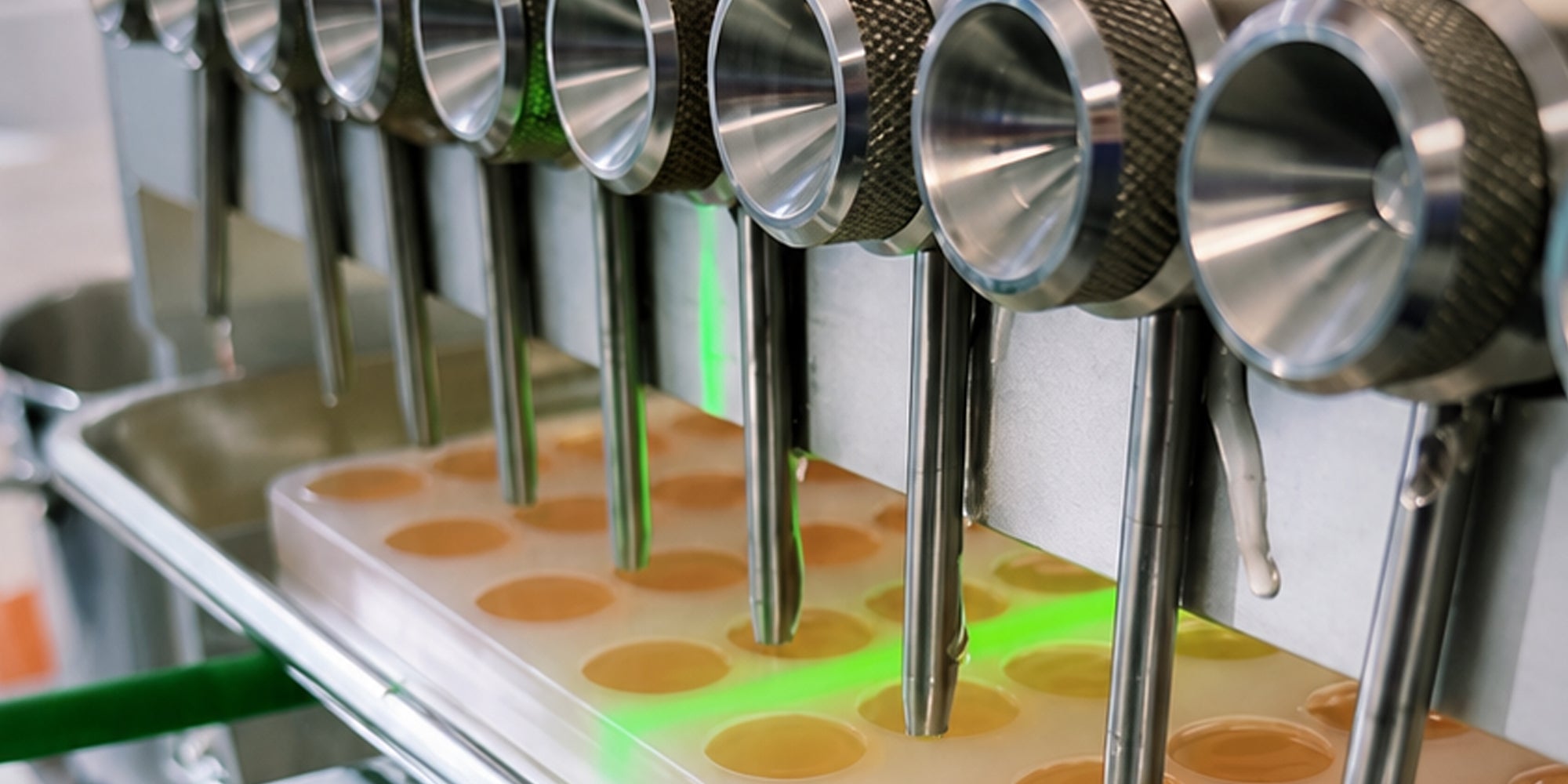
Filling thousands of fragile powder indentations requires distinct engineering capable of hitting moving targets without disturbing a single grain of starch. Sophisticated servo-motors ---computer-controlled electric muscles---synchronize the filling head perfectly with the conveyor belt, ensuring the syrup lands dead-center in the cavity. This allows high-capacity confectionery depositing systems to mimic the precision of an inkjet printer, but with hot, viscous liquid.
At the heart of this operation, three specific components work in unison to transform a bulk mixture into individual doses:
- The Hopper: A heated, double-walled reservoir that maintains the syrup's temperature so it remains fluid.
- The Pistons: High-precision pumps that measure the exact volume of liquid for each candy, acting like automated syringes.
- The Nozzles: Needle-like tips that inject the syrup and retract instantly to cut off the flow.
This mechanical accuracy is non-negotiable for precision dosing for vitamin-infused gummies, where a variation of even a few milligrams could mean the difference between a safe supplement and a regulatory failure. To maintain this consistency without creating a sticky web of sugar across the factory floor, modern depositors utilize "suck-back" technology, which reverses pressure in the nozzle to prevent drips between pours.

Manual Gummy Production: The Flood-and-Scrape Method
While large factories rely on automated gummy depositor machines, many manufacturers—especially small-batch producers, R&D labs, and nutraceutical startups—use a manual technique known as the flood-and-scrape method.
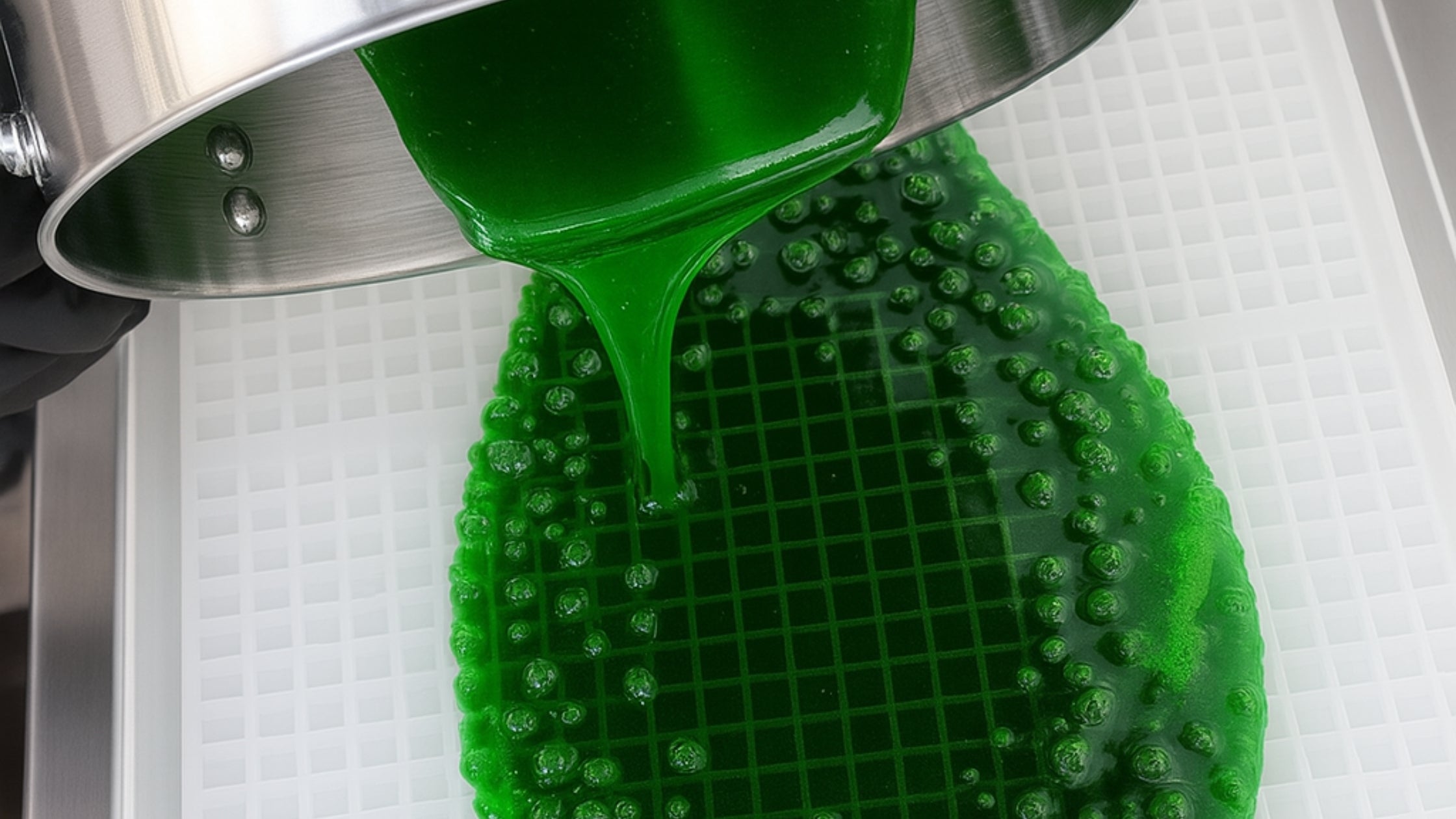
In this process, several molds are placed on a flat flood table. The warm gummy slurry is poured across the molds, allowing the liquid to fill each cavity. A scraper or straight-edge tool is then passed across the surface to remove excess mixture and level the molds. This allows operators to fill many molds quickly without a depositor machine.
The method works especially well with food-grade silicone molds, which provide easy release and consistent cavity volumes. It is commonly used for pilot production, recipe development, and flexible small-scale manufacturing.
If you'd like to learn more about this production method and the molds designed for it, explore our Flood & Scrape Silicone Molds, which are built specifically for efficient manual gummy production.
Traditional Starch Molding
Historically, gummies were produced using starch molding systems.
In this process, trays filled with cornstarch are stamped with the desired candy shapes. The gummy slurry is deposited into these impressions, and the starch absorbs moisture while preventing the candy from sticking.
After curing, the gummies are removed and the starch is recycled.
While versatile, starch molding produces airborne powder, which can create sanitation challenges in modern manufacturing environments.
Starchless Manufacturing with Silicone Molds
Many modern factories are now adopting starchless gummy production using reusable molds.
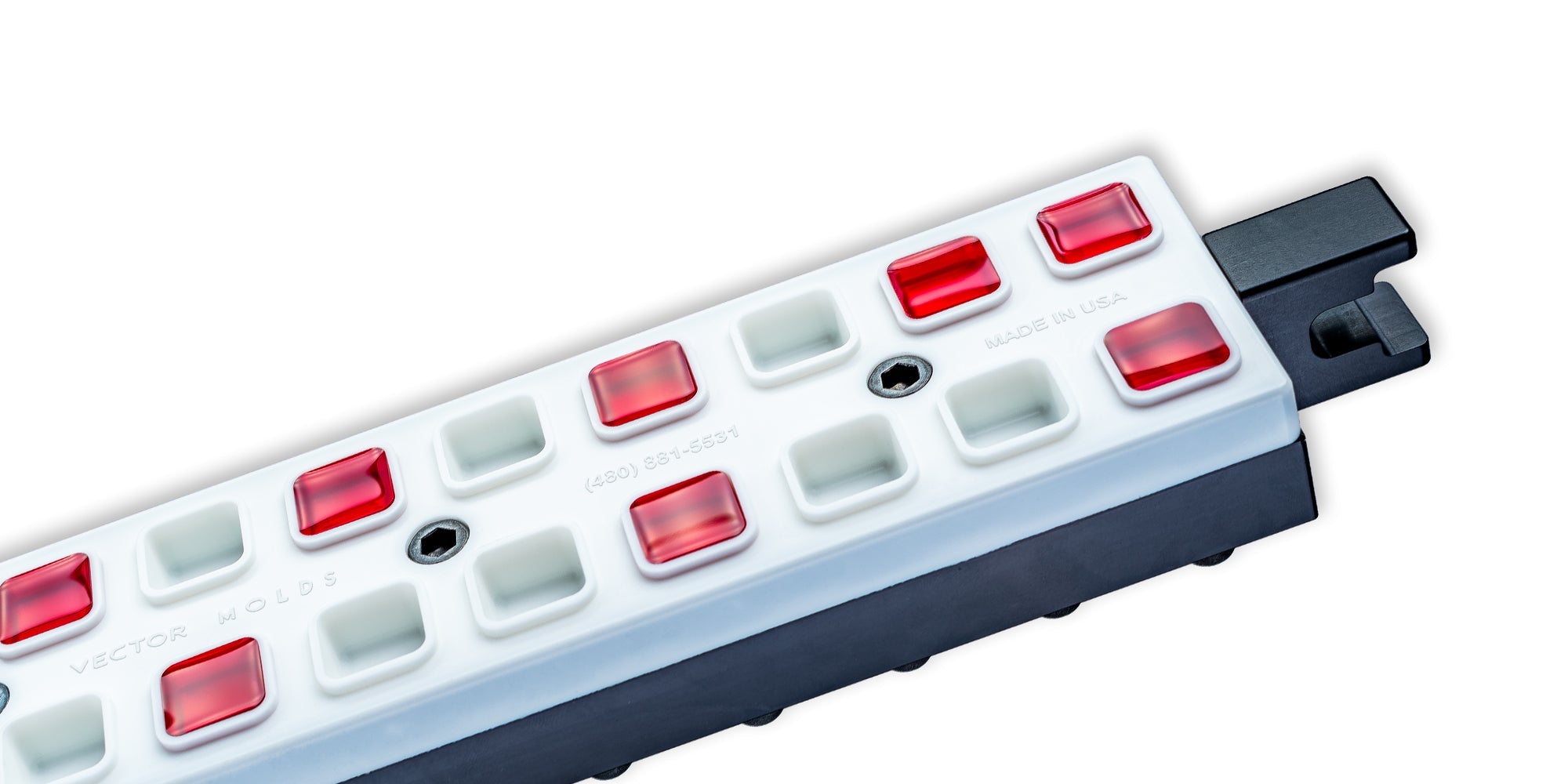
Instead of depositing into powdered starch, the syrup is deposited directly into food-grade silicone molds.
This method offers several advantages:
-
Cleaner production environment
-
Faster curing times
-
Improved mold detail
-
Reduced contamination risk
Food-grade silicone gummy molds are particularly popular because they provide excellent flexibility, allowing detailed shapes to release easily without breakage.

The Finishing Touch: How Drying and Oiling Create that Perfect Shine
Fresh from the mold, a gummy is still vulnerable. Bagging warm gelatin immediately causes it to fuse into a single, sticky brick. To prevent this, factories place trays in controlled drying rooms where temperature and humidity are carefully regulated, functioning like massive dehumidifiers at a crisp 65-75°F. This crucial curing phase removes excess moisture, ensuring the texture is chewy rather than slimy.
The last stop is the finishing drum, where gummies are tumbled to prevent clumping. Depending on the desired experience, manufacturers apply:
- Carnauba wax (shine)
- Sugar sanding (sour/sweet)
- Citric acid coating
The result is an intricate industrial ballet that ensures every piece remains distinct, consistent, and delicious.
Innovation in Modern Gummy Manufacturing
The gummy industry continues to evolve rapidly as consumer demand grows for new flavors, textures, and functional ingredients.
Manufacturers are increasingly producing:
-
Vitamin gummies
-
Nutraceutical supplements
-
Functional wellness gummies
-
Sugar-free or vegan gummies
- Pharmaceutical gummies
To support these innovations, factories rely on advanced equipment, precision depositor machines, and high-quality silicone molds that can maintain consistent dosing and detailed shapes.
As the market expands, modern production lines must deliver speed, accuracy, and food safety, turning what appears to be a simple candy into an impressive feat of industrial engineering.
Q&A
Question: What is the gummy “slurry,” and why is hitting the right Brix so important? Short answer: The slurry is the base mixture of water, sweeteners, and gelling agents (gelatin for classic bounce or pectin for a clean, short break) prepared in large industrial cookers. Hitting the target Brix—the percentage of sugar solids—is critical to texture, shelf stability, and consistency. If Brix is too low, gummies stay wet and spoil; too high, and they set rock-hard. Precision cooking ensures every batch reaches the same density before molding.
Question: Why do factories use vacuum cookers instead of open boiling? Short answer: Vacuum cookers lower the boiling point of water, letting manufacturers remove moisture quickly at gentler temperatures. This prevents scorching delicate flavors and avoids sugar caramelization, both of which are risks with open-air boiling. The result is a consistent, flavor-true slurry that can be precisely dialed to a target Brix without damaging the ingredients.
Question: How do depositors fill thousands of cavities accurately without making a mess? Short answer: Servo-driven depositors synchronize the filling head with the moving conveyor so syrup lands dead-center in each cavity. A heated hopper keeps the slurry fluid, precision pistons meter exact volumes, and retracting nozzles with “suck-back” stop drips between shots. This accuracy is essential for vitamin-infused gummies, where even milligram-level variation can cause regulatory issues, and it keeps the line clean.
Question: Why are manufacturers moving to starchless molds? Short answer:Starchless lines eliminate airborne starch dust, improving hygiene to meet supplement-grade standards. Permanent, washable molds also speed production: paired with cooling tunnels, they can set gummies in about 20 minutes versus up to 24 hours in starch. Silicone molds flex for easy release and intricate shapes. After demolding, gummies are dried in controlled rooms (about 65–75°F) and finished in drums with wax, sugar sanding, or citric acid to prevent sticking and deliver the desired sheen or sourness.
Share:
MjBizCon 2025: Meet the Vector Molds Team
Revolutionize Your Sweet Creations: Industrial Silicone Molds for Candy Manufacturing